You Got It Dude Groovy Retro Svg Design
When I sit down to review a new digital asset for my embroidery studio, I am rarely looking at just a file. I am looking at the potential of a finished product. I am visualizing the thread tension, the fabric grain, and the final customer reaction. Today, I am evaluating You Got It Dude Groovy Retro Svg Design, a graphic that claims versatility across a wide range of media, from apparel to home decor. As a designer who has stitched thousands of designs, my job is to tell you whether this piece holds up in the hoop or if it remains better suited for a flat print.
The First Impression: Mood and Visual Personality
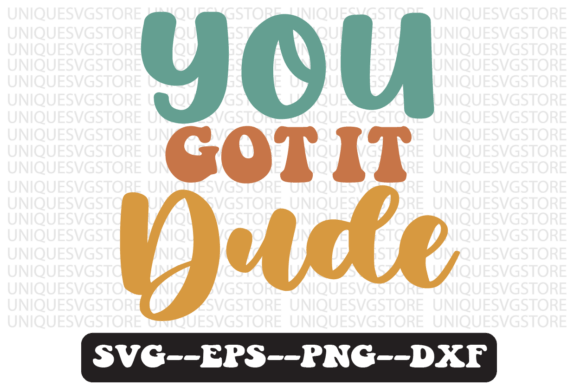
The name alone sets a specific tone. "You Got It Dude" immediately evokes a sense of casual confidence, nostalgia, and laid-back cool. The "Groovy Retro" descriptor suggests a color palette and typography rooted in the late 60s or early 70s—think warm earth tones, mustard yellows, burnt oranges, and perhaps some muted teals. In the world of handmade goods, this aesthetic is powerful because it taps into current trends of vintage revival while remaining timeless enough for everyday wear.
Visually, the design likely relies on bold, rounded letterforms and perhaps some swirling, organic shapes typical of the era. For an embroidery designer, the immediate question is always about negative space and detail density. Does the design breathe? Or is it so cluttered with tiny decorative elements that it will turn into a muddy mess when stitched? From what I can assess, this design appears to prioritize legibility and impact over intricate detailing. This is a smart choice for a machine embroidery design intended for mass appeal. It feels approachable, friendly, and undeniably fun. It does not try to be high fashion; it tries to be a conversation starter.
Real-World Application: Where This Design Shines
I have been thinking about where You Got It Dude Groovy Retro Svg Design would actually sell well. My first scenario involves custom sweatshirt embroidery. There is something inherently cozy and nostalgic about retro phrases on heavy cotton fleece. Imagine this design centered on the chest of a unisex crewneck sweatshirt in a heather grey or cream color. The contrast between the soft fabric and the structured stitching of the text creates a tactile experience that customers love. It works perfectly as a personalized gift for someone who appreciates vintage culture or simply enjoys a good laugh.
Another strong candidate is the baby market. While the phrase "Dude" might seem slightly masculine, the retro aesthetic is often gender-neutral. Applied to a onesie or a baby blanket, the groovy font adds a playful touch. Parents are constantly looking for unique items for baby embroidery projects that stand out from the usual floral or animal motifs. This design offers a personality-driven alternative that feels modern yet classic. It could easily become a bestseller in a boutique shop specializing in custom apparel for infants.
We must also consider the tote bag design angle. Canvas totes are a staple for craft fairs and Etsy sellers. A large-scale version of this graphic on a natural canvas bag is striking. It serves as both a functional item and a walking advertisement for the brand. Furthermore, its versatility allows it to work on kitchen towels or aprons, appealing to hobbyists who enjoy cooking but want their kitchenware to reflect a bit of flair. The design’s adaptability to various handmade products is one of its strongest assets.
Technical Considerations and Stitching Challenges
However, enthusiasm must be tempered with technical reality. Not every graphic translates seamlessly to thread. When evaluating You Got It Dude Groovy Retro Svg Design, we must look at how it handles different fabrics and hoop sizes.
If you plan to stitch this on dark fabric, the thread colors become critical. You cannot rely on the background fabric to provide contrast. You will need bright, saturated threads to make the retro colors pop. Conversely, on light fabrics, you have more flexibility, but you must ensure the thread weight is appropriate for the scale of the design. If the design includes fine lines or tiny script, those areas may require a smaller hoop size and careful digitizing to prevent puckering.
One area to watch is the use of fill stitch versus satin stitch. If the design uses large blocks of color, ensure the stitch density is balanced. Too dense, and the fabric will distort, especially on stretchy materials like jersey knits used for t-shirts. Too sparse, and the backing material will show through, ruining the clean look of the finished product. I strongly advise testing this design on scrap fabric first. Check how the edges hold up and whether any small details get lost in the stitching process.
Additionally, consider the substrate. While this design is marketed for mugs and wall art, remember that embroidery requires a pliable surface. Applying this to rigid items like hard hats or thick leather requires specialized techniques. It is best suited for textiles where the needle can penetrate smoothly without damaging the material. For curved surfaces like caps, ensure the design is digitized with proper underlay stitches to keep the fabric flat against the cap form.
Practical Notes for the Embroidery Designer
- Stabilizer Selection: Always match your stabilizer to the fabric weight. For lightweight tees, a tear-away might suffice, but for heavier hoodies, a cut-away provides lasting stability.
- Thread Contrast: Test your chosen thread colors against your actual fabric swatches. Screen colors can be deceiving.
- Black and White Mockups: Convert the design to grayscale to check the balance of light and dark areas. This helps identify if any part of the design is too busy or too empty.
- Licensing: Before listing this as a commercial embroidery item on Etsy or your own shop, verify the license terms. Ensure you are allowed to sell physical items made from the design.
Final Verdict: A Versatile Asset for Creative Entrepreneurs
You Got It Dude Groovy Retro Svg Design is more than just a pretty picture; it is a viable foundation for a profitable line of craft business items. Its strength lies in its emotional resonance—it makes people smile, feel nostalgic, and appreciate a bit of humor. For the Etsy seller or small shop product creator, this design offers a low-risk, high-reward opportunity. It fits seamlessly into categories ranging from holiday embroidery gifts to everyday design assets for personal use.
While it may not be suitable for highly detailed, delicate lacework or extremely small hoops, its robust, retro charm shines in standard applications like tote bags, sweatshirts, and nursery decor. By paying attention to thread selection, stabilizer choice, and fabric compatibility, you can transform this digital graphic into a tangible, high-quality embroidery project that customers will cherish. It is a solid addition to any designer’s library, offering both creative satisfaction and commercial potential.